
The COTC Is Sweeping Through the South in Spring 2027
The Compost Operations Training Course (COTC) will start 2027 strong with two spring trainings in the U.S. South: Apopka, FL in March and Galveston County, TX in May.

The Compost Operations Training Course (COTC) will start 2027 strong with two spring trainings in the U.S. South: Apopka, FL in March and Galveston County, TX in May.

Managing a contemporary composting facility is about a lot more than biology; it is a high-stakes balancing act. CREF aims to help the industry standardize and scale through a multi-pronged approach.

The Test Methods for the Examination of Composting and Compost (TMECC) quarterly update report has been released, highlighting progress on priority research, method validation, and consistency across the manual.

Our December 10th webinar will discuss challenges and considerations of incorporating food scraps into existing yard waste composting processes.

Diane Hazard has been the Executive Director of CREF for over four years. In early 2027, Hazard will step down, leaving CREF a stronger organization, primed for growth.
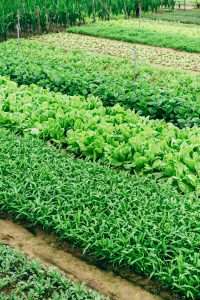
CREF is excited to announce that this fall we closed a multi-year education project with Nestlé Corporation. Our non-profit team shared expertise on the creation and practical use of compost to help their international corporation move forward on their regenerative goals.

Test Methods for the Examination of Composting and Compost (TMECC) is the lab manual of standard protocols for the composting industry, used by compost producers and laboratories in the U.S. and worldwide to evaluate compost quality. Standard test methods enable the comparison of composts across testing labs and composting processes across facilities.

We are excited to announce the opening of the annual poster and bookmark contests for International Compost Awareness Week (ICAW). The 2027 theme is All Paths Lead to Compost.

The Compostable Field Testing Program’s dataset — spanning 2,000+ mesh bag samples and 33,000+ dose trials — reveals clear disintegration trends across variations in temperature, moisture, duration, and processing technology.

Five years ago, conversations about compostable packaging were defined by the promise of material innovation. If food-contact packaging was designed to break down in industrial compost systems, then both the packaging and the food scraps it carries could be recovered together, enabling composters to divert more organics from landfill while supporting a more circular economy.
